TPE product development · Dongguan factory
Dual Opening Sleeves: Structure, Materials, and Custom Development
Develop a distinctive men's sleeve with a structure designed around both openings. We help brands and wholesalers confirm opening dimensions, internal space, material hardness, and mold requirements—then move from drawing to tested sample to production.
As a Dual Opening Sleeve Manufacturer and Dual Opening Sleeve Supplier, we provide in-house design, tooling, sampling, and bulk production in TPE.
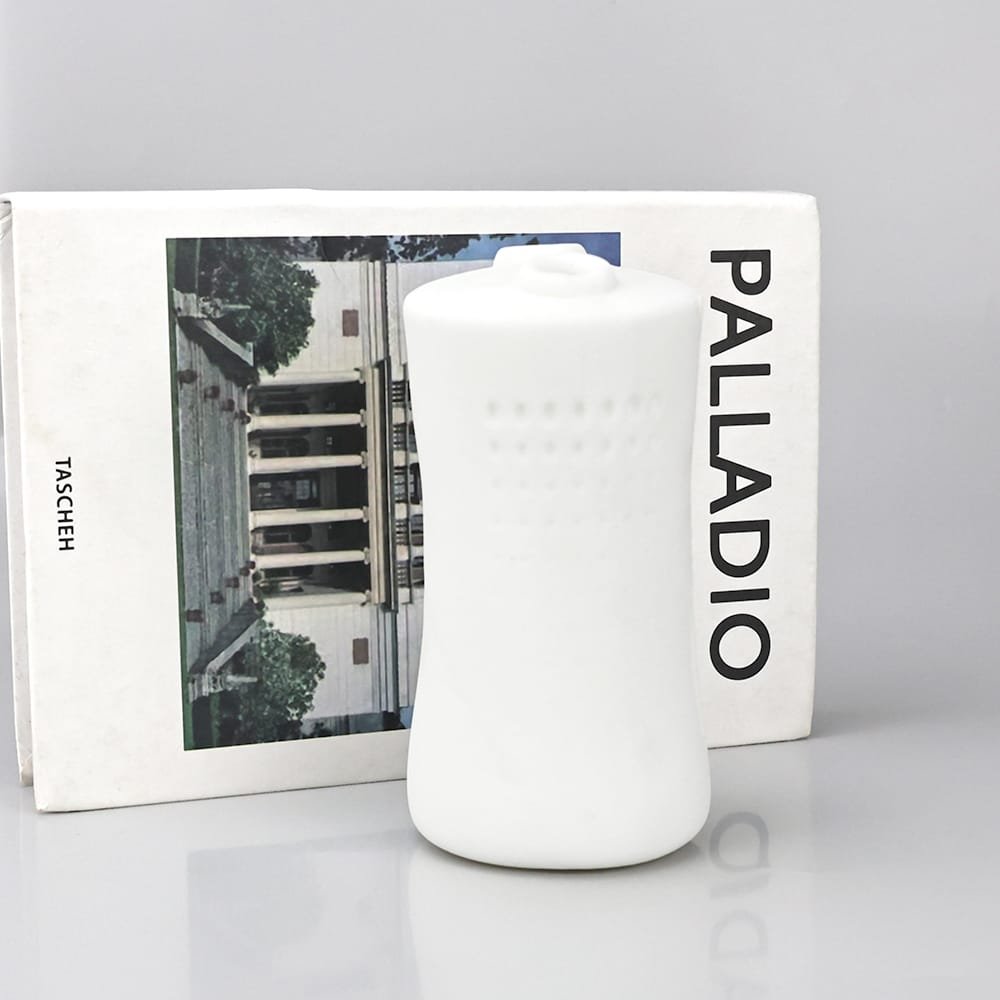
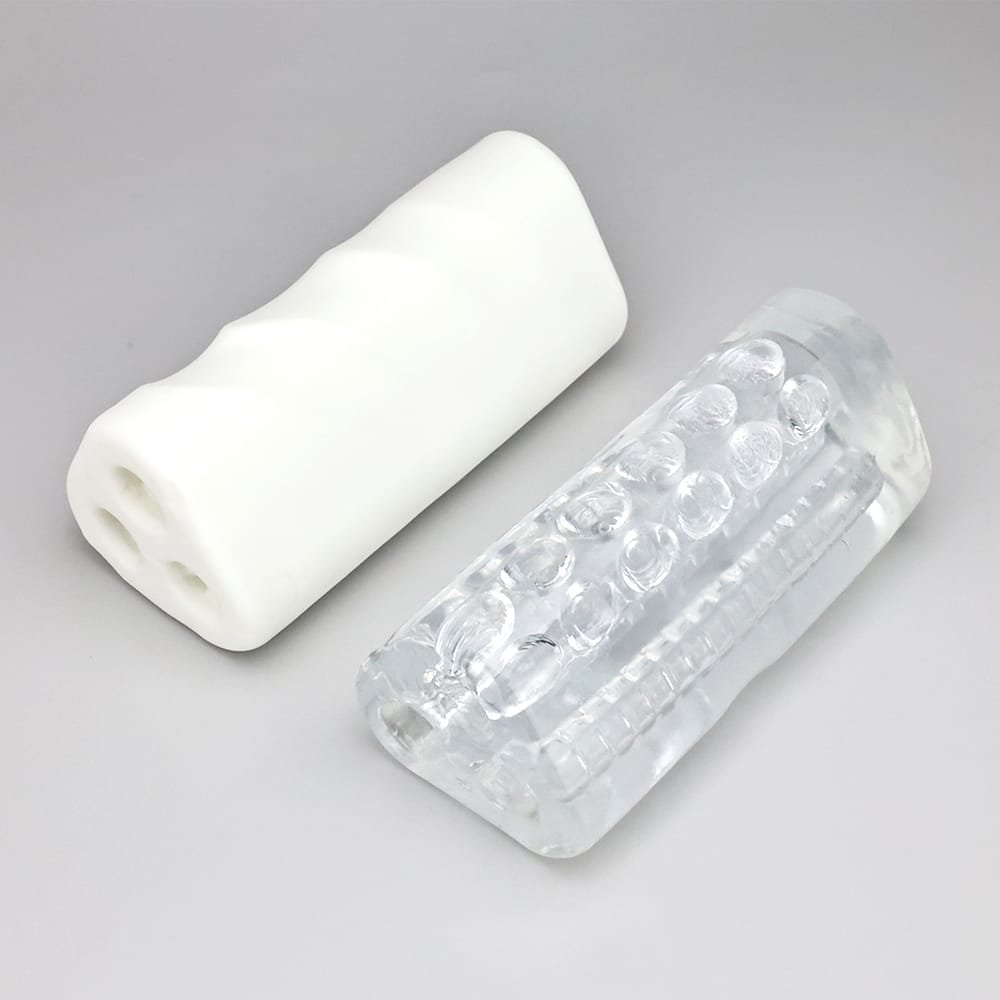
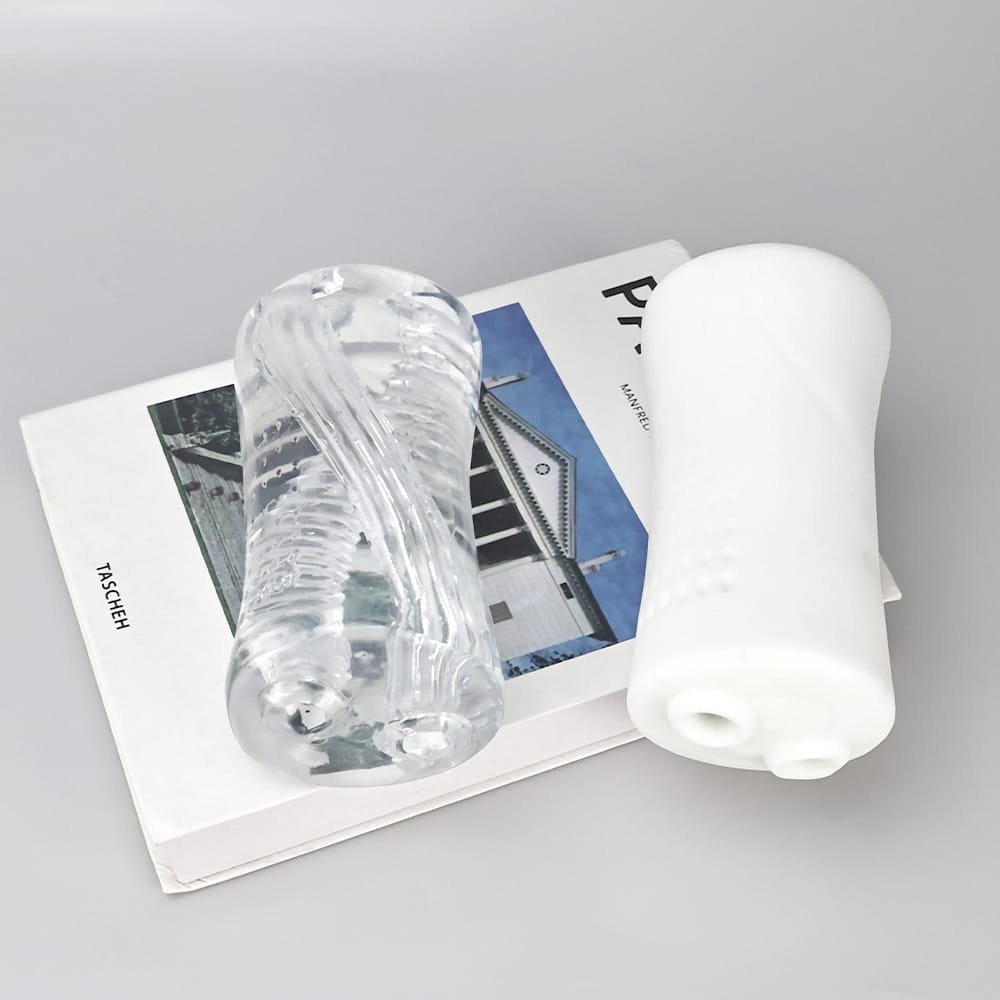
Designed as a complete structure
What a second opening changes
A dual opening sleeve adds a second access point, usually at the opposite end. Depending on the product concept, it can support easier cleaning or create a different pressure profile through the cavity.
It is not simply a single-opening sleeve with another hole. Each opening carries a different load, so diameter, distance between openings, wall thickness, and internal profile work together. A change at one end can alter fit at the other. We review those relationships before tooling begins.
Balance both ends
Confirm front and rear opening sizes, their shape, and the fit each one is intended to provide.
Shape the cavity
Set cavity length and internal profile to match your concept, reference sample, and usable-space target.
Tune stretch and recovery
Review wall thickness and hardness together, especially around the openings where material is under load.
Develop beyond two
Two openings are standard; three or more can be assessed according to structural complexity and mold scope.
Project specification
Dimensions and options we review
Share a drawing or reference sample, or use these typical ranges as a starting point. Final specifications are confirmed per project.
Need a structure review?
Send target opening sizes, hardness, a sketch or reference, color, and quantity for a proposed mold plan.
Discuss your specification| Parameter | Typical range or option | What it affects |
|---|---|---|
| Material | TPE; medical-grade or standard compound by request | Feel, elasticity, surface finish |
| Shore A hardness | 15–35 A | Stretch resistance, firmness, recovery |
| Front opening diameter | 25–45 mm | Entry comfort and cavity grip |
| Rear opening diameter | 20–40 mm | Second access point and fit balance |
| Distance between openings | Set per drawing | Internal stretch and pressure zone |
| Internal cavity length | 90–160 mm | Overall depth and usable space |
| Wall thickness | 2.0–4.0 mm | Stiffness, tear risk, mold flow |
| Number of openings | 2 standard; 3 or more by project | Structure complexity and mold cost |
| Color and mold | Custom color match; steel mold sized to structure | Brand consistency, tooling cost, cycle time |
| Certification documents | CE, RoHS, REACH, POPs | Import compliance requirements |
| Lead time and MOQ | Stock/reorder about 1–3 days; new mold quoted per complexity; no general MOQ | Availability depends on model and customization |
Material development
Tune hardness and wall thickness together
Harder TPE can hold an opening shape more firmly, but may feel rigid around thin wall sections. Softer compounds can feel more yielding and may need additional wall thickness to help limit deformation over repeated use.
We can run two or three compound variants on the same mold for a practical comparison of feel and recovery. Color can be matched in the trial batch, so the approved sample becomes the reference for bulk production and reorders.
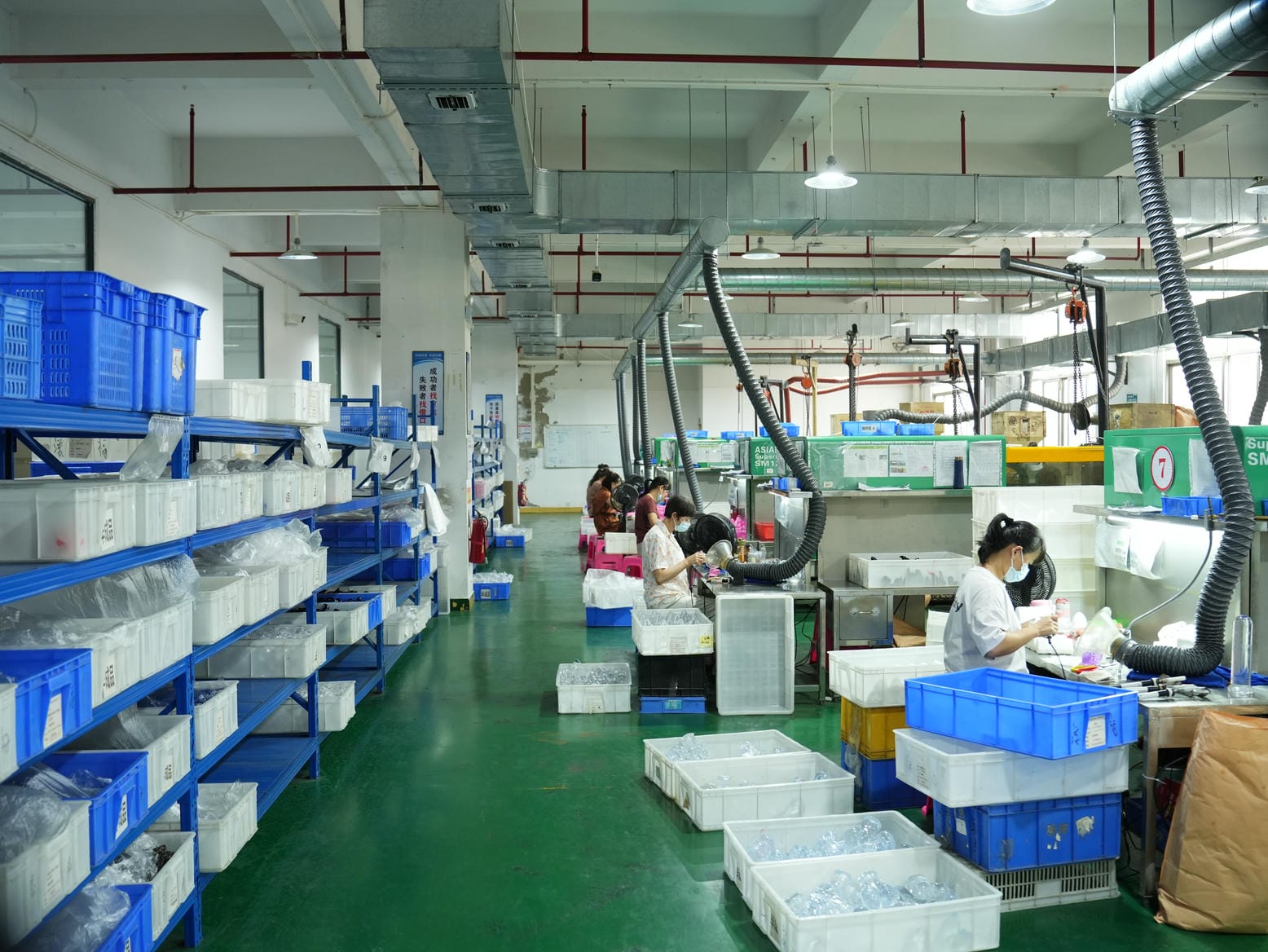
10 + 2
Injection molding and EDM machines
~500 m²
Machining area for finishing and assembly
In-house from design to shipment
A measured path from drawing to production mold
Our Dongguan operation brings 3D design, mold making, EDM work, polishing, trial molding, injection, machining, assembly, packaging, and shipping into one workflow. The opening geometry depends on the mold core and slide structure; in-house coordination helps us assess design changes alongside tooling and molding.
Equipment includes a mold-making machine, lathe, and dedicated material mixing and shredding lines for preparation and runner recycling.
-
1
Review the reference
Check your drawing or sample and identify dimensions that need confirmation.
-
2
Model and plan the structure
Create a 3D model and review wall thickness around each opening.
-
3
Prototype critical dimensions
Use a prototype or trial mold to test the key dimensions before final tooling.
-
4
Trial, measure, and adjust
Mold the approved compound and color, review the sample, and revise the mold if needed.
-
5
Move into mass production
Check dimensions, hardness, and visual quality by batch.
Each stage ends with a sample for review. Resolving changes during sampling generally costs less than revising finished steel, so we include a trial stage in the development workflow.
Brand-ready customization
Custom color and private-label packaging
Provide a color reference for matching and confirmation on a trial batch. We log the compound and pigment ratio for each approved sample to support consistency across reorders.
Packaging can include your logo, product name, and instruction insert in your language. Product and packaging are checked together before shipping.
Plan a color and packaging trial
For brands and wholesale buyers
Is this structure right for your range?
Dual opening sleeves suit brands and wholesalers developing a differentiated men's product line, as well as buyers looking to add an upgraded model alongside existing single-opening sleeves.
A second opening adds mold complexity, so this structure may not fit projects focused only on the lowest-cost copy of an open-market design. For a basic restock, the in-stock range is a faster option, typically shipping in about 1–3 days.
What to include in your RFQ
A clear brief helps us return a useful structure review, sample timeline, and mold quote.
- ✓Target opening sizes and cavity preferences
- ✓Hardness range and color reference
- ✓Reference sample, drawing, or sketch
- ✓Quantity and packaging requirements
- ✓Any required function modules
FAQ
Common questions about OEM and wholesale
Have a different structure in mind? Send your drawing or reference sample for review.
Ask about your projectCan you OEM dual opening sleeves from a reference sample?
Yes. Send a sample or drawings. We review the openings, wall thickness, and mold approach before quoting.
Do you offer wholesale with no MOQ?
There is no general MOQ. Availability depends on the selected model and customization requirements.
Can entrance size and internal texture be adjusted?
Yes, within tooling limits. Entrance geometry and texture may require mold changes, which we confirm after design review.
What is the lead time for stock sleeves versus new molds?
Stock or reorder products take about 1–3 days. New cavity tooling follows an individual sample and production schedule.
Can hardness and color be customized?
Yes. TPE color and hardness adjustments are standard OEM options, confirmed after sample sign-off.
Sample and quote request
Request Dual-Opening Product Samples
Test the structure, hardness, and color before placing a bulk order. Share your target dimensions, hardness range, color reference, quantity, and any drawing or sample you have. We will respond with a structure review, sample timeline, and mold quote for new designs.
A sample gives your team a physical reference for approval and helps align the opening geometry and compound with your product target.