Outsourced product development
Outsourced Product Development for Adult Brand Product Managers
Product managers in adult categories often have the market data and the roadmap, but not enough internal engineering time to test several product directions at once. We work as an external development and manufacturing team for these projects. We take a brief through 3D modeling, mold development, prototyping, trial molding and injection production, and we report back at each stage so you can decide what moves forward.
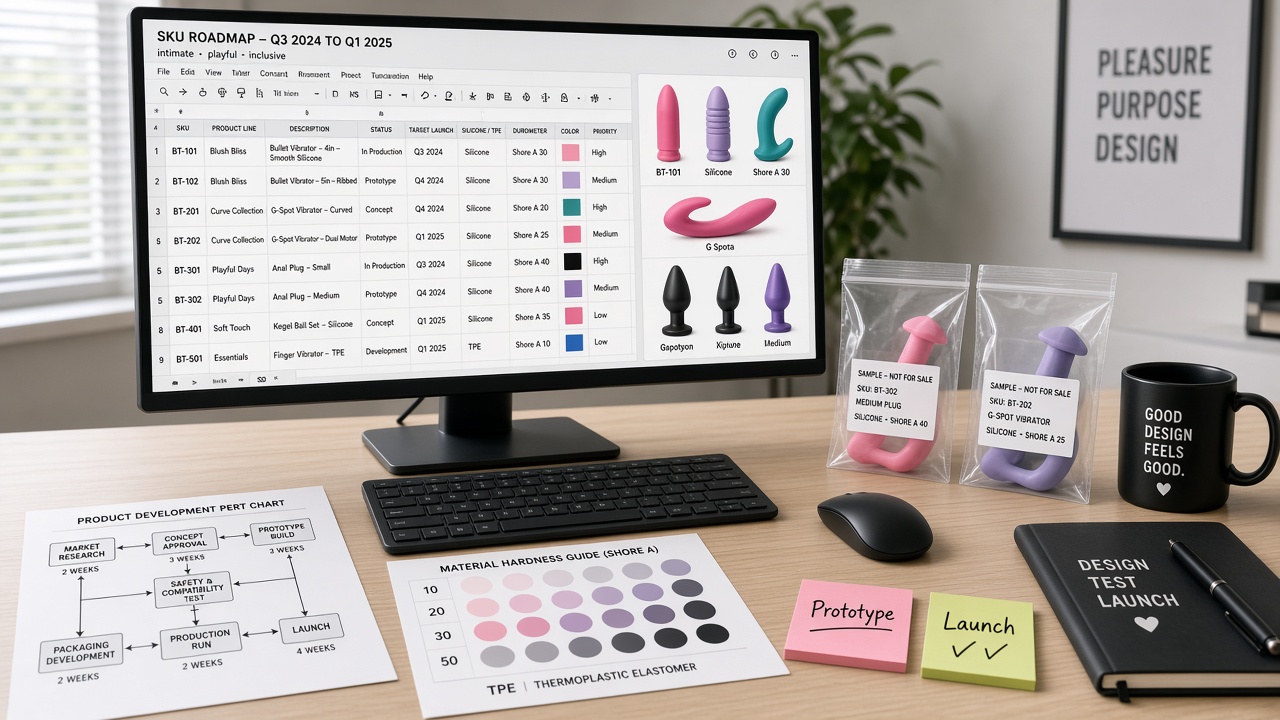
Our Dongguan facility at a glance
Mold making, material mixing, injection, mold mounting, machining, packaging and warehousing are all done in-house, so technical questions do not need to pass through several subcontractors.
- Usable floor space
- ~1,800 m²
- Injection workshop
- ~900 m²
- Injection machines
- 10 units
- Machining workshop
- ~500 m²
How a TPE Product Moves from Concept to Mass Production
Most delays in new product programs come from unclear handoffs between design, tooling and production, not from the manufacturing steps themselves. A typical TPE project runs through five stages. Each stage has a clear output, so your team can review progress without needing to be on the factory floor.
-
1
Concept and structure review
The design is checked for moldability: wall thickness, draft angles, undercuts, parting lines and the number of parts needed for assembly.
-
2
3D model and engineering drawings
Shape, material and hardness targets are fixed in CAD before any steel is cut.
-
3
Prototype or mold
Depending on your budget and risk tolerance, you can approve a rapid prototype first or move directly to mold development.
-
4
Trial molding and sample approval
Trial shots are checked against the drawing and your reference samples. Changes are documented before the mold is released for production.
-
5
Mass production, assembly and packing
Production runs follow the approved sample, with a written record of any deviations.
Manufacturing capabilities at our Dongguan plant
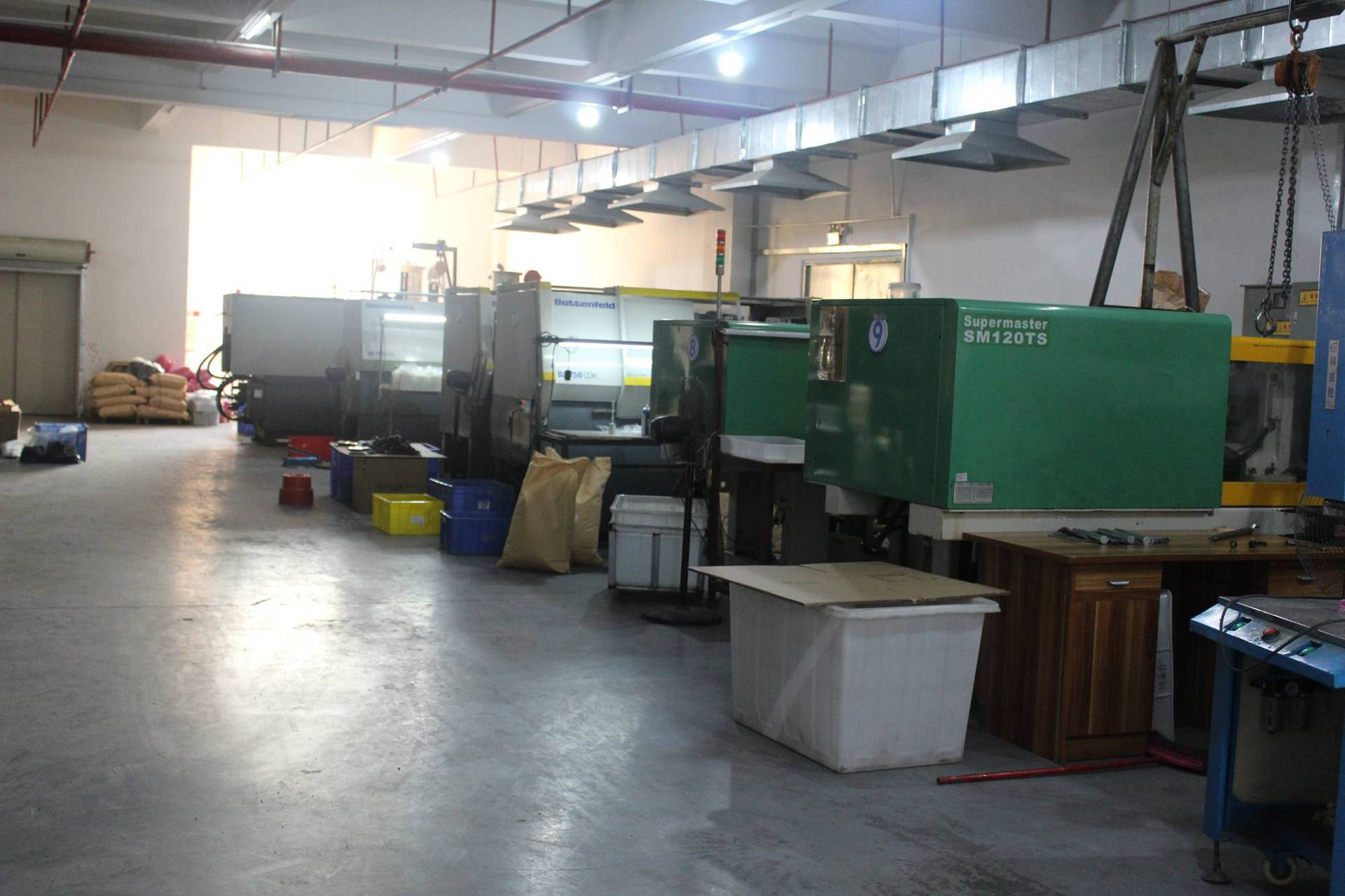
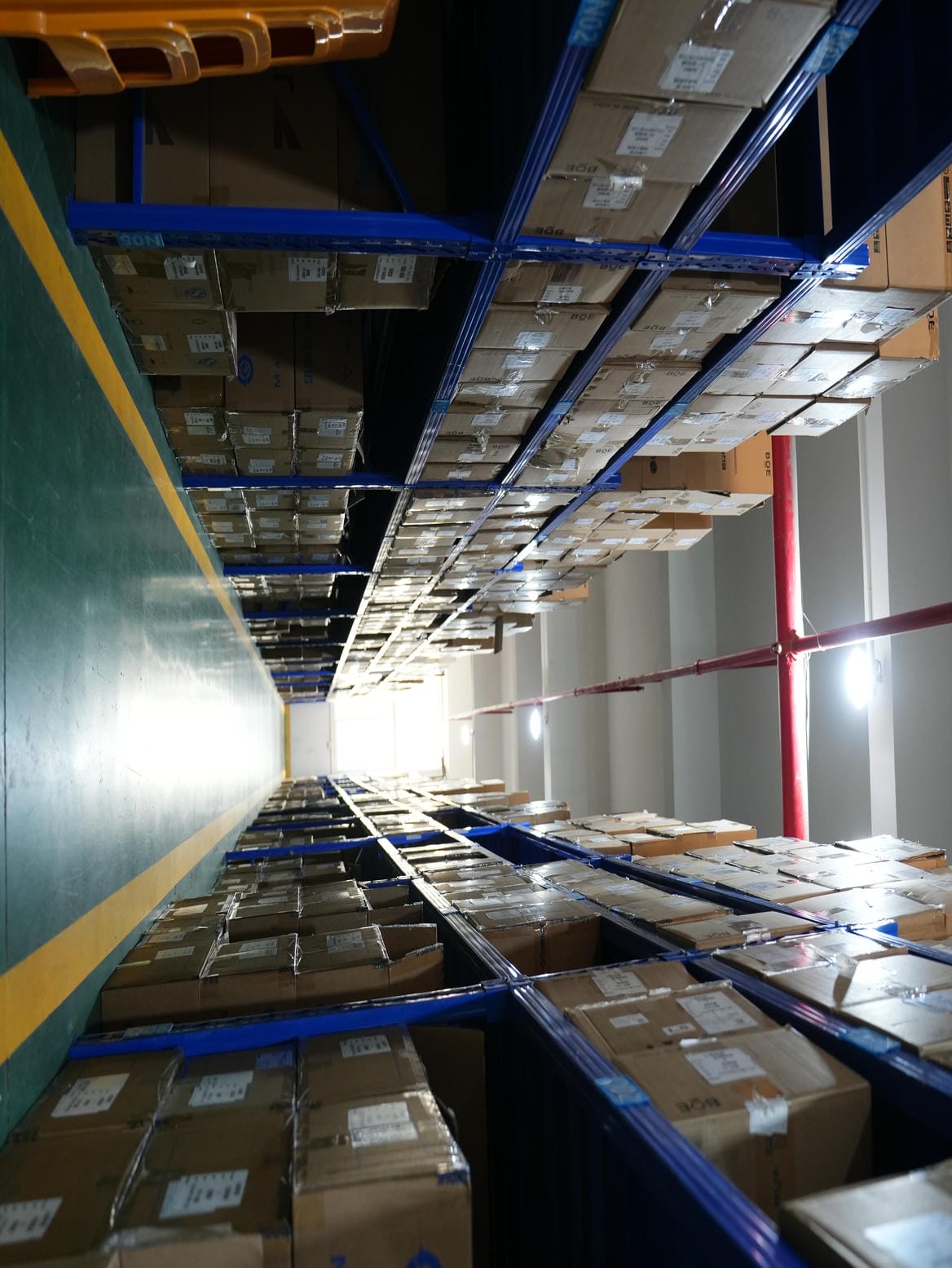
We operate a closed-loop facility in Dongguan, Guangdong. The injection workshop covers about 900 square meters, the machining workshop about 500, and the warehouse about 300, so each step from design to packing sits under one roof.
3D design and engineering review
We work from your sketches, reference images, existing samples or partial drawings. The review covers how the product will be made, not only how it looks: wall thickness, sink or flash risk, assembly tolerances for multi-part products, and the effect of TPE hardness on feel and durability. When changes are needed, we propose alternatives and show the impact on cost and schedule before you decide.
Mold development
Mold making is supported by one dedicated mold-making machine and two EDM units, plus EDM and lathe machining. Each mold is scoped individually because structural complexity drives cost and lead time. Once the design is frozen, we provide a schedule for steel preparation, machining, polishing, mold mounting and trial molding, and update it at each milestone.
Rapid prototyping and trial molding
Prototypes and trial samples test ergonomics, material feel and structural function before full tooling is committed. Trial molding runs on production equipment, so samples reflect the process used for mass production. Color matching and hardness adjustment are handled at this stage, so decisions are made on real parts rather than screen renders.
Injection production and assembly
Ten injection molding machines, supported by three mixers and three shredders, allow several programs to run in parallel or one product to move into volume quickly. Machining, assembly and on-site packaging are handled in-house, including private-label packaging and custom instruction inserts.
Quality documentation and compliance
Our primary material is TPE. We can supply CE, RoHS, REACH and POPs documentation for European and US market requirements. Documentation requests are handled during the sampling stage, so compliance paperwork is aligned with the approved material and design rather than prepared after production starts.
Staged project management and sample approval
Product managers often need to show progress to internal stakeholders while keeping spending tied to decisions. We organize projects around gates. Each gate has a defined deliverable, a sign-off owner on your side, and a documented set of changes. A typical project is split into a design freeze, a prototype approval, a trial sample approval and a production release.
- One technical contact handles all communication, with written updates that include photos, measurements and test notes.
- Cost and schedule impacts are stated before work continues whenever a change at one gate affects them.
- Focused reviews keep internal discussions on specific decisions instead of open-ended debate.
Choosing the development path for your project
Not every program needs a new mold. The right route depends on how much differentiation you need and how fast you need to test the market.
| Development path | Best suited for | Typical scope |
|---|---|---|
| Stock product with custom packaging and color | Fast market tests, existing range extension | Packaging, logo, color and instruction changes |
| Modified existing design | Testing a variation of a proven structure | Limited shape, size or hardness adjustments |
| New mold development | Differentiated products, exclusive SKUs | Full 3D design, tooling, trial molding and approval |
| Staged prototype-first route | Unproven concepts, limited budget | Rapid prototype and user feedback before tooling |
Prototype first for concepts
For concept-stage projects, a prototype-first route reduces risk. You learn which features matter before investing in steel.
Parallel validation
If your team is testing two or three directions, we can build comparative prototypes or trial samples, so the choice rests on physical samples rather than drawings alone.
Project fit for product and innovation teams
Our work fits teams that have a defined product brief and need manufacturing depth that is hard to build internally for a single project. This includes brand product managers running multiple launches, e-commerce new product development teams that want faster iteration on private-label lines, and innovation groups testing new categories or structures.
When we are the right partner
We are a better fit when you can provide target specifications, reference samples or market feedback, and when you expect to review samples in stages.
Projects that depend on unverified claims, or on very short timelines without flexibility on scope, usually do better with a smaller prototype phase first.
Starting a project brief
To give a useful initial assessment, we need the following information. Once we receive the brief, we review manufacturability, suggest a development path, and send a scoped proposal with a sample plan and an estimated schedule.
Standard OEM and ODM adjustments have no minimum order quantity. New mold programs are quoted after structural review.
- Product type, intended use and target market (EU, US or other)
- Reference images, sketches, CAD files or existing samples
- Preferred material hardness range and color direction
- Target quantity for the first production run and expected reorder frequency
- Packaging and labeling requirements, including private-label needs
- Compliance documents required by your market or sales channel, and target timeline with internal approval gates
Frequently asked questions
Plan Your Next Product Project
Share your concept, target market and timeline, and our engineering team will reply with a feasibility view, a development route and the first steps for sampling.
Email:
Phone:
Address: